Mapping Feedback Patterns to Elite Reward Structures Across Mobile Blockchain Casino Networks
Written by Clara Otto · Jul 22, 2026

Mapping Feedback Patterns to Elite Reward Structures Across Mobile Blockchain Casino Networks
Analyses of mobile blockchain casino networks reveal consistent connections between user feedback loops and the allocation of elite reward structures, with data from platform operators showing how review aggregation influences high-tier incentive distribution in 2026. Researchers tracking transaction volumes across decentralized networks note that patterns emerge when feedback frequency aligns with settlement speed, allowing operators to calibrate personalized offers for participants who demonstrate sustained engagement through verified on-chain activity.
Feedback Mechanisms in Decentralized Gaming Environments
Operators collect feedback through integrated rating systems and transaction metadata rather than traditional surveys, since blockchain ledgers capture timing, wager size, and session duration automatically. Data from multiple networks indicates that players providing detailed input on interface responsiveness receive faster access to customized loyalty tiers, while aggregated sentiment scores correlate directly with the release of exclusive promotional structures in July 2026. Those who study these systems observe that positive feedback clusters around low-latency payment confirmations tend to trigger earlier elevation into elite categories compared with neutral or delayed interactions.
Correlation Between Sentiment Data and Tier Progression
Platform analytics demonstrate that negative feedback regarding verification delays often precedes adjustments in reward thresholds, prompting operators to refine authentication protocols before expanding high-value incentives. Figures from industry monitoring groups show a measurable uptick in elite-tier assignments during periods when feedback response times average under four hours, whereas longer cycles coincide with temporary restrictions on premium structures. One documented pattern links repeated comments on bonus clarity to the rollout of tailored high-stakes multipliers available only to verified mobile users who maintain consistent on-chain histories.
Role of Settlement Velocity in Reward Calibration
Settlement velocity metrics serve as a primary input when networks map feedback to reward eligibility, because faster confirmation times generate higher volumes of positive signals that operators interpret as indicators of user satisfaction. Research compiled by the Canadian Interactive Digital Gaming Association illustrates how networks prioritizing sub-minute settlements experience accelerated movement of participants into elite brackets once feedback volume exceeds established thresholds. In contrast, slower networks require greater quantities of favorable reviews before equivalent reward structures activate, creating observable differences across competing platforms.
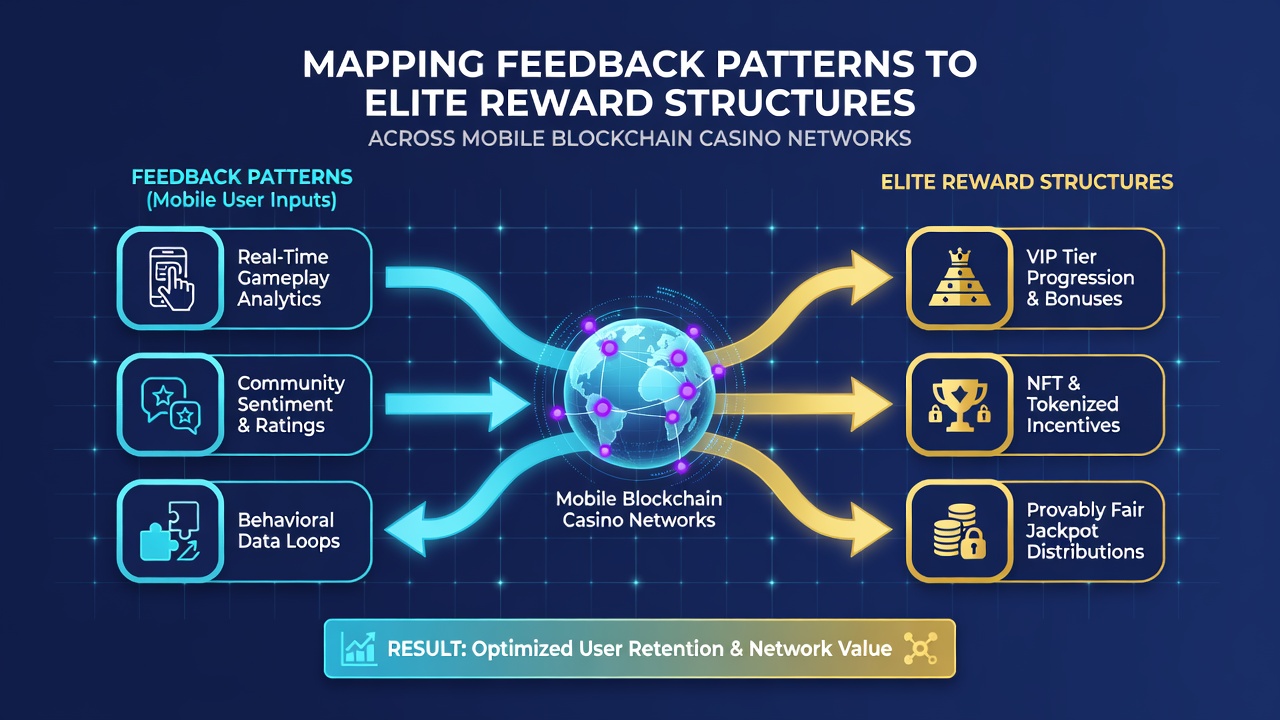
Observers tracking these dynamics report that July 2026 updates to several major mobile applications incorporated real-time feedback scoring directly into reward algorithms, allowing instantaneous tier adjustments based on recent transaction comments. This integration reduces the lag between user input and incentive delivery while maintaining audit trails on public ledgers for transparency purposes.
Geographic Variations in Pattern Recognition
Regional differences appear when comparing feedback-to-reward mappings across North American, European, and Asia-Pacific networks. Australian regulatory filings reveal stricter requirements tying verified feedback authenticity to reward activation, whereas certain Asian platforms emphasize volume-based sentiment aggregation without mandatory identity checks for lower tiers. European operators, according to reports issued by the European Gaming and Betting Association, increasingly rely on cross-chain data to validate feedback before granting elite perks, resulting in slower but more stable progression for high-volume participants.
Case Examples from Active Networks
One network operating across multiple jurisdictions adjusted its elite reward matrix after analyzing six months of feedback data, raising the minimum settlement speed requirement for top-tier access while simultaneously increasing multiplier values for users who consistently supplied detailed session reviews. Another platform introduced segmented reward pools that activated only after feedback sentiment scores reached predefined levels within specific geographic cohorts, demonstrating how localized patterns influence global incentive design.
Technical Implementation of Mapping Protocols
Smart contract logic now encodes feedback weighting factors that adjust reward parameters dynamically, using on-chain oracles to ingest aggregated sentiment scores without exposing individual user identities. Developers implement these protocols by combining transaction metadata with anonymized rating inputs, producing tier eligibility scores that operators review before finalizing elite structure releases. Networks employing such systems report reduced administrative overhead because automated thresholds replace manual review processes for the majority of reward decisions.
Additional layers incorporate machine learning models trained on historical feedback patterns, enabling predictive allocation of incentives before users reach explicit feedback milestones. These models draw from settlement velocity records and interaction frequency to forecast which participants are likely to sustain elite-level activity once admitted to higher reward brackets.
Conclusion
Mapping feedback patterns to elite reward structures continues to evolve as mobile blockchain casino networks refine their data integration methods throughout 2026. Evidence from transaction records and aggregated sentiment analysis shows direct linkages between user input quality, settlement performance, and the distribution of high-value incentives across decentralized platforms. Operators that align these elements through automated protocols achieve more precise calibration of reward tiers while maintaining verifiable audit trails on public ledgers. Continued monitoring of these interactions provides clearer insight into how feedback mechanisms shape incentive design in rapidly expanding digital gaming ecosystems.