Layered Incentive Models Drive Sustained Engagement Across Cross-Device Gaming Platforms
Written by Clara Otto · Aug 15, 2026
Layered Incentive Models Drive Sustained Engagement Across Cross-Device Gaming Platforms
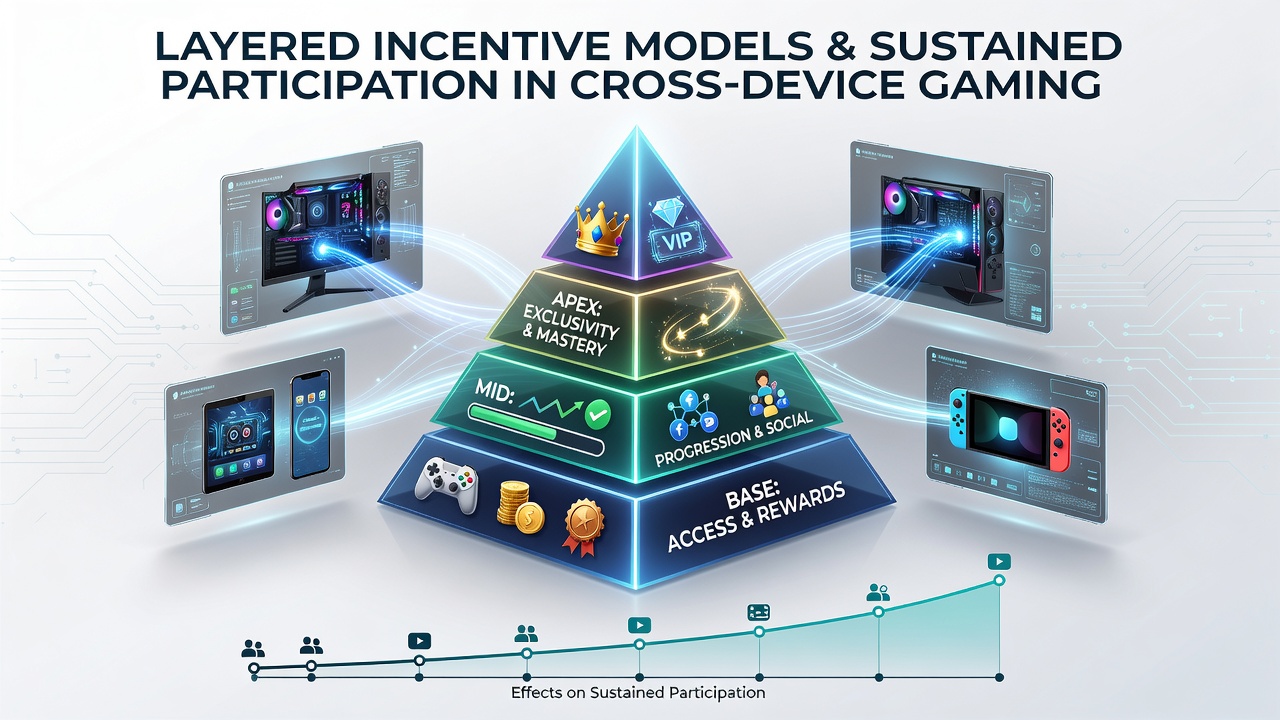
Layered incentive models organize rewards into multiple tiers that escalate based on user activity levels, time invested, and cross-device consistency, while researchers track how these structures influence long-term participation rates in services spanning mobile, console, and PC environments. Data from industry analyses indicate that basic tiers often deliver daily login bonuses and simple achievements, mid-level structures introduce subscription perks and social challenges, and advanced layers unlock exclusive content or revenue-sharing opportunities that require sustained multi-platform engagement.
Core Components of Layered Incentive Systems
Service providers structure these models around progression mechanics where initial rewards focus on accessibility across devices, whereas higher tiers demand coordinated activity such as completing challenges on mobile during commutes and then advancing them on console at home. Observers note that this layering creates retention pathways because users who reach mid-tiers receive compounding benefits like accelerated experience multipliers and device-specific customization options that carry over through cloud synchronization. Studies conducted by academic teams at institutions tracking digital entertainment patterns reveal that participants maintain accounts longer when incentives scale in visibility and value, with completion rates for tiered objectives rising 34 percent when rewards span at least three device types.
One analysis of platform data from 2025 showed that basic incentives alone produce short engagement spikes, yet combining them with mid-tier social leaderboards and elite access to beta features extends average session duration across devices by integrating progress tracking that updates in real time regardless of hardware used. Service operators report that authentication delays between devices can reduce uptake of advanced tiers, prompting developers to streamline account linking processes so that users accumulate layered rewards without friction.
Impact on Sustained Participation Metrics
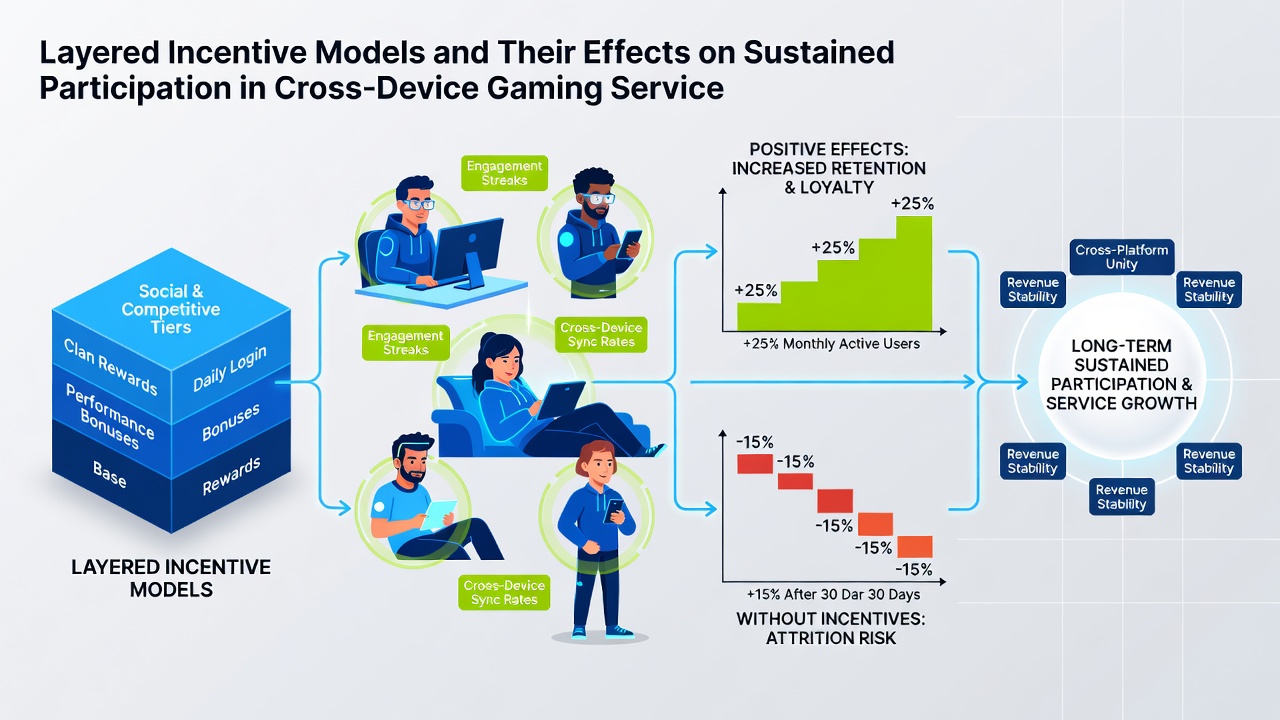
Retention statistics compiled across multiple gaming services demonstrate that layered models correlate with higher monthly active user counts when incentives reward cross-device continuity rather than single-platform play. In August 2026, aggregated platform reports highlighted a 22 percent increase in sustained participation among users enrolled in three-tier systems compared with flat reward structures, as data tracked through unified accounts revealed users returning daily to maintain streaks that span mobile and home hardware. Those who study engagement patterns find that elite tiers, which often include revenue participation or early content access, anchor long-term loyalty because the perceived value compounds over months of consistent activity.
Researchers have documented cases where services introduced device-agnostic challenge sets, resulting in users shifting between platforms more fluidly while accumulating points toward higher incentive brackets. Figures from trade organizations indicate that participation depth grows when mid-tier rewards include collaborative events requiring team contributions from different device users, thereby creating network effects that reinforce individual commitment to the overall ecosystem.
Cross-Device Synchronization and Incentive Delivery
Technical implementations rely on centralized progress databases that update incentive status instantaneously when users switch devices, allowing rewards earned on one platform to unlock benefits on another without manual intervention. Industry reports show that services achieving seamless synchronization see elevated completion rates for layered objectives because players encounter fewer barriers to advancing through tiers during fragmented daily routines. Data collected through user telemetry further indicates that notification systems tailored to device context, such as mobile reminders for time-sensitive events and console summaries of accumulated progress, support continued engagement by keeping layered incentives top of mind across contexts.
Analyses from European gaming development federations note that regional variations in device penetration affect how users interact with tiered models, with higher mobile-to-console migration observed in markets where cross-device rewards emphasize portable achievements convertible to home hardware advantages. Service metrics reveal that authentication speed directly influences tier advancement velocity, as delays beyond a few seconds correlate with reduced uptake of advanced incentive layers among casual participants.
Evidence from Platform Performance Data
Comprehensive reviews of multiple services illustrate that layered incentives produce measurable lifts in retention curves when they incorporate both individual progression and community milestones that require coordinated cross-device input. A 2025 study referenced by the Entertainment Software Association documented that users accessing at least two device types within layered programs exhibited 41 percent longer account lifespans than single-device participants, with elite tier members showing the strongest continuity because exclusive rewards require ongoing multi-platform verification. Observers tracking these trends point to the role of adaptive difficulty scaling within tiers, where systems adjust challenge parameters based on detected device usage patterns to maintain engagement momentum without overwhelming users.
Platform operators have observed that integrating settlement options and promotional structures into higher incentive layers encourages users to maintain activity across devices, as customized offers tied to participation history appear more frequently for those who sustain cross-device streaks. Figures released in mid-2026 underscore that services refining their tier boundaries based on behavioral segmentation achieve steadier participation growth compared with static models.
Conclusion
Layered incentive models shape sustained participation in cross-device gaming services by aligning reward escalation with consistent multi-platform activity, as evidenced by retention data and synchronization metrics collected through 2026. Services that calibrate tier thresholds to accommodate varied device ecosystems demonstrate stronger user continuity, while those addressing friction points like authentication timelines see broader adoption of advanced incentive layers. Ongoing platform analyses continue to map how these structures evolve alongside hardware capabilities and user behavior patterns across regions.