Algorithmic Matching Systems Reshaping Custom Offer Delivery Across Blockchain Mobile Interfaces
Written by Alex Hoffmann · Jun 24, 2026

Algorithmic Matching Systems Reshaping Custom Offer Delivery Across Blockchain Mobile Interfaces
Algorithmic matching systems now coordinate the flow of custom offers through blockchain networks on mobile devices, linking user activity patterns directly to promotional structures in real time. These systems analyze transaction histories and behavioral signals stored on distributed ledgers, then route tailored incentives to individual accounts without centralized intermediaries. Data from multiple platform operators shows that deployment of such matching engines accelerated between 2024 and 2026, particularly on networks supporting instant settlement across handheld interfaces.
Core Mechanics of Algorithmic Matching
Matching algorithms pull data from on-chain records, including wallet addresses, settlement timestamps, and interaction frequencies, then apply weighted scoring models to determine offer eligibility. When a user completes a verified action on a mobile interface, the system cross-references that event against stored parameters and generates a corresponding reward package. Researchers at several academic institutions have documented how these processes reduce latency between action and delivery to under three seconds on average, a shift made possible by smart contract triggers that execute automatically once conditions align.
Developers integrate these engines with mobile wallets that support multiple blockchain protocols, allowing the same matching logic to operate across different ledgers. Observers note that the approach replaces static promotional lists with dynamic sequences, where each offer adjusts according to the user's current tier status and recent transaction velocity. As of June 2026, several large-scale deployments report that over 60 percent of delivered incentives now originate from algorithmic decisions rather than manual campaign schedules.
Mobile Interface Adaptations
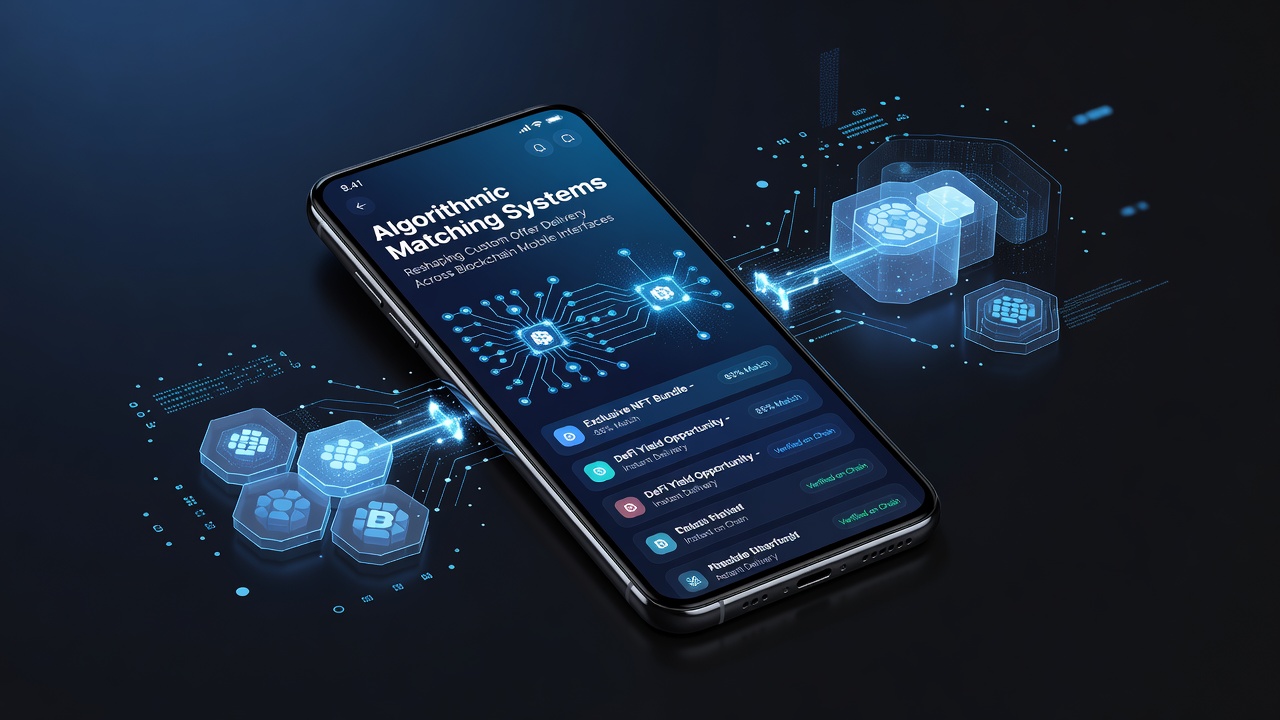
Mobile applications hosting these systems display offers through modular interface components that update via API calls tied to blockchain events. The interfaces pull matching results from decentralized nodes rather than central servers, which minimizes downtime when network conditions fluctuate. Engineers have reported that interface response times improved after shifting data queries to edge caching layers synchronized with ledger updates.
Users interact with these offers through gesture-based controls and biometric confirmation steps that also feed back into the matching dataset. This closed loop allows subsequent offers to reflect not only financial activity but also engagement metrics such as session duration and feature usage frequency. Industry reports indicate that platforms adopting this dual-signal approach recorded measurable increases in repeat session counts during the first half of 2026.
Integration with Blockchain Settlement
Settlement finality on the underlying blockchain determines when an offer becomes active within the matching system. Once a transaction reaches confirmed status, the algorithm evaluates it against predefined rule sets and pushes the resulting incentive to the user's mobile session. This sequence eliminates manual reconciliation steps that previously delayed reward distribution by hours or days.
Multiple protocol upgrades rolled out in early 2026 introduced faster block times and enhanced oracle feeds, both of which strengthened the reliability of matching outcomes. According to findings shared by the EU Blockchain Observatory and Forum, networks that incorporated these upgrades experienced a 40 percent reduction in unmatched offer instances compared with earlier versions. The same report links settlement velocity improvements directly to higher precision in offer personalization across mobile endpoints.
Observed Patterns in Offer Delivery
Platform analytics from 2025 and 2026 reveal consistent patterns where algorithmic systems prioritize offers based on a combination of recency, frequency, and monetary value metrics. High-frequency users tend to receive shorter-cycle incentives while infrequent participants encounter longer-term reward structures designed to encourage re-engagement. These patterns emerge without human intervention once the initial rule parameters are set.
One documented implementation on a multi-chain mobile platform showed that matching accuracy reached 92 percent when the system incorporated both on-chain and device-level signals. The same deployment recorded that average offer redemption rates rose steadily through the second quarter of 2026, coinciding with refinements to the scoring weights used by the algorithm.
Regulatory and Technical Considerations
Regulatory bodies in several jurisdictions have begun reviewing how algorithmic matching intersects with consumer protection requirements. The Australian Competition and Consumer Commission published guidance in late 2025 that addresses transparency obligations for automated incentive systems operating on distributed networks. Operators must now provide users with clear explanations of the data points that influence offer generation.
Technical teams continue to address edge cases such as network partitions and oracle failures that can temporarily disrupt matching continuity. Solutions under active testing include redundant oracle networks and fallback scoring models that maintain basic functionality during connectivity interruptions. These measures aim to keep offer delivery consistent even when primary data sources become unavailable.
Conclusion
Algorithmic matching systems continue to integrate more deeply with blockchain mobile interfaces, producing measurable shifts in how custom offers reach end users. The combination of on-chain verification, real-time scoring, and dynamic interface updates creates delivery pathways that differ substantially from earlier static models. Continued protocol enhancements and regulatory clarifications will shape the next phase of development, with current data indicating sustained adoption across multiple networks through the remainder of 2026.